WhatsApp Number: +919599619392
Email Address: info@qacamail.com
The ISO 20000-1:2018 standard establishes a set of requirements for organizations to establish, implement, maintain, and continuously improve a service management system (SMS).
Organizations can use the guidance in this standard as a framework for managing SMS effectively. ISO 20000-1:2018 (Service Management System Requirements) and ISO 20000-10:2018 (Concepts and Vocabulary) were updated in September 2018 to address evolving needs and challenges in IT service management delivery.
All service providers, large or small, in IT services, facilities management, and business services wanting to ensure their services' quality should get ISO/IEC 2000-1:2018. The ISO 20000-1:2018 helps ensure services that adapt to the changing service delivery system.
A Quality Austria Central Asia certificate verifies that internal corporate processes have been checked and are in compliance with the relevant standard for ISO 20000-1:2018. In addition, our certified certification body conducts audits that follow the ISO 20000-1:2018.
You can request a certificate from us to evaluate your organization's performance based on ISO 20000-1:2018.
Related Certificates
ISO 3834-2:2003 is a supplement to ISO 9001 requirements, bringing together a comprehensive solution of quality requirements related to welding as well as a Quality Management System. ISO 3834 specifies quality requirements for metallic materials fusion welding processes. It can be used in a variety of situations and applications, including railway vehicles, steel structures, pressure equipment, and so on.
All organizations concerned with fabrication industries, construction companies, i.e., on-site work, repair and maintenance contractors, and manufacturers of products, can apply for the certificate.
A Quality Austria Central Asia certificate verifies that internal corporate processes have been checked and are in compliance with the relevant standard for ISO 3834-2:2003. In addition, our certified certification body conducts audits that follow the ISO 3834-2:2003.
You can request a certificate from us to evaluate your organization's performance based on ISO 3834-2:2003.
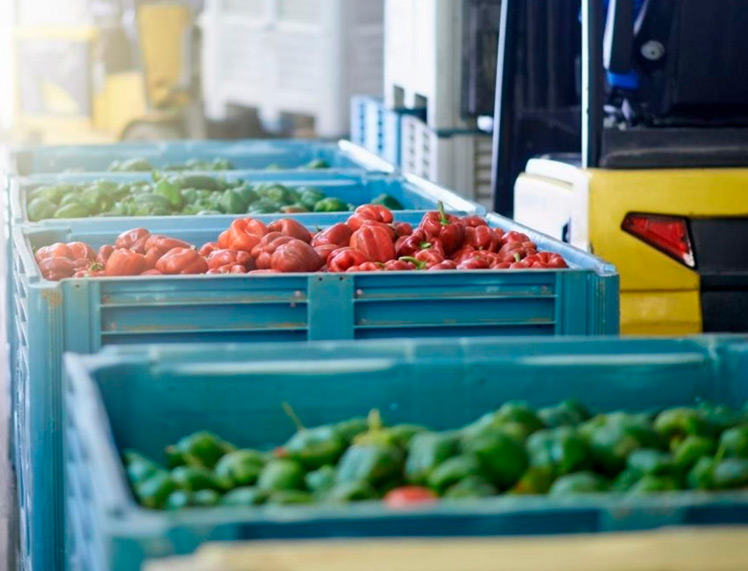
Food Safety System Certification 22000 (FSSC 22000) is an internationally recognized, ISO-based certification process for food safety auditing and certification in the food and beverage manufacturing industry.
FSSC 22000 is based on the ISO 22000, ISO 22003, and technical specifications for sector prerequisite programs (PRPs), created after long, extensive and open consultation with a wide range of stakeholders.
Anyone who desire to upgrade their certification to a GFSI recognized Standard, FSSC 22000 is the next logical step.
FSSC 22000 can be used by organizations in the food/feed supply chain of any size or complexity. Makers of various types of food and beverages, ingredients/additives, pet and animal feed manufacturers, and packaging manufacturers are all included.
A Quality Austria Central Asia certificate verifies that internal corporate processes have been checked and are in compliance with the relevant standard for FSSC 22000 Certification. Our certified certification body conduct an audit that follows the FSSC 22000 Certification.
You can request a certificate from us to evaluate your organization's performance based on FSSC 22000 Certification.
Lorem Ipsum is simply dummy text of the printing and typesetting industry. Lorem Ipsum has been the industry's standard dummy text ever since the 1500s, when an unknown printer took a galley of type and scrambled it to make a type specimen book. It has survived not only five centuries, but also the leap into electronic typesetting, remaining essentially unchanged. It was popularised in the 1960s with the release of Letraset sheets containing Lorem Ipsum passages, and more recently with desktop publishing software like Aldus PageMaker including versions of Lorem Ipsum.
Lorem Ipsum is simply dummy text of the printing and typesetting industry. Lorem Ipsum has been the industry's standard dummy text ever since the 1500s, when an unknown printer took a galley of type and scrambled it to make a type specimen book. It has survived not only five centuries, but also the leap into electronic typesetting, remaining essentially unchanged. It was popularised in the 1960s with the release of Letraset sheets containing Lorem Ipsum passages, and more recently with desktop publishing software like Aldus PageMaker including versions of Lorem Ipsum.